

Are you ready?
Do you have a plan?
Plan for your recovery
before flooding occurs.
Did you know flooding is not covered under your regular homeowners insurance policy?
Take these steps to learn more about flooding. Don't let the water win.
Flooding is the most frequent and expensive natural disaster in the U.S., according to the Federal Emergency Management Agency (FEMA). Yet, most people don’t realize that their homeowners insurance doesn’t typically cover flood.
With more than 20 percent of the National Flood Insurance Program’s (NFIP) claims coming from outside high-risk flood areas those who live in areas with low-to-moderate flooding risk should understand their risk and consider flood insurance.
The way water flows and drains can change due to building development, changing weather patterns, wildfires or other disasters that alter the terrain. As a result, the government is constantly evaluating risks and revising flood maps to keep up with these changes, so it is a good idea to check the maps annually for updates or sign up to receive an alert when your communities’ flood map is updated.
To learn more about flood risks in your area, contact your local emergency management office or FEMA to look at a flood map.
NFIP coverage is typically around $700 a year in high risk areas. Property owners located in low-to-moderate risk areas should ask their agents if they are eligible for the Preferred Risk Policy, which provides flood insurance protection at a lower cost than a standard policy in a high-risk area.
Standard home insurance doesn't cover flood damage, but generally would provide additional living expenses coverage if your home were uninhabitable because of wind damage or other perils associated with the flood.
Talk to your licensed insurance agent to discuss your needs. See the section below for useful questions to ask about coverage.
If a major flooding event happens, are you prepared?
Flooding is the most frequent and expensive natural disaster in the United States. Yet, most homeowners and renters insurance policies do not typically cover flooding.
Just because you don't live in a high-risk flood area doesn't mean you don't need flood insurance. If it rains where you live or do business, it can flood. With over 20 percent of the National Flood Insurance Program's (NFIP) claims coming from outside high-risk flood areas, those who live in areas with low-to-moderate flooding risk should understand their risk and consider flood insurance.
Don't delay buying flood insurance. Most flood policies require a 30-day waiting period before they go into effect. According to the Federal Emergency Management Agency, just one inch of water can cause up to $25,000 in damage.
Flood Insurance Resources
Click to view and save.
NFIP Summary of Coverage
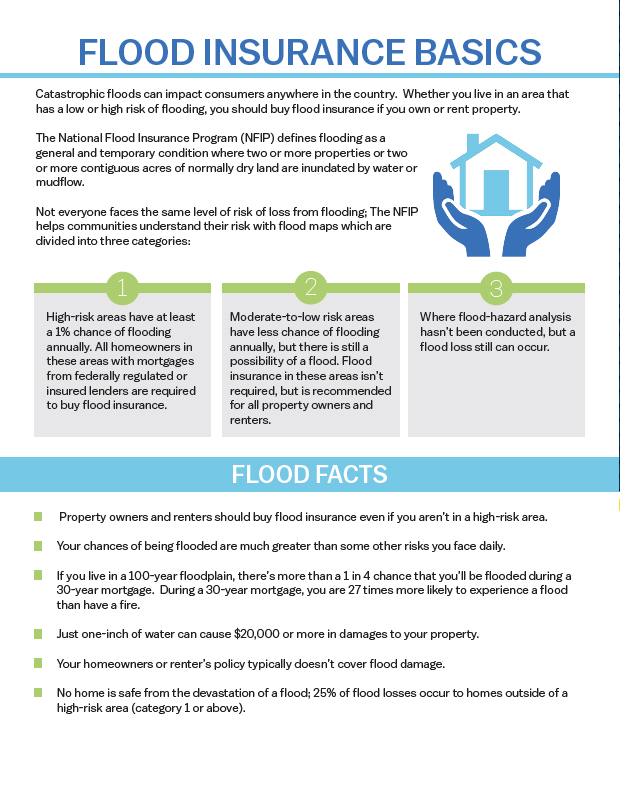
Flood Insurance Basics
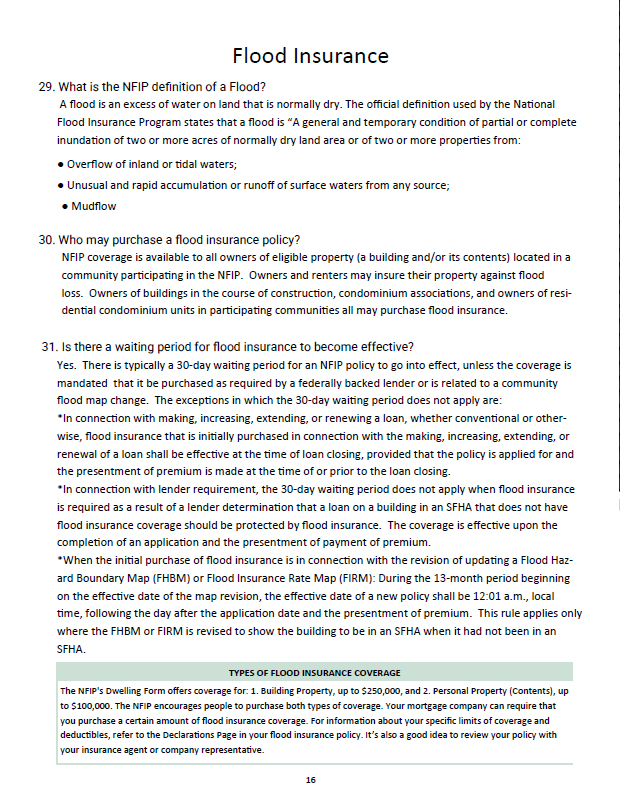
Flood Insurance Basics
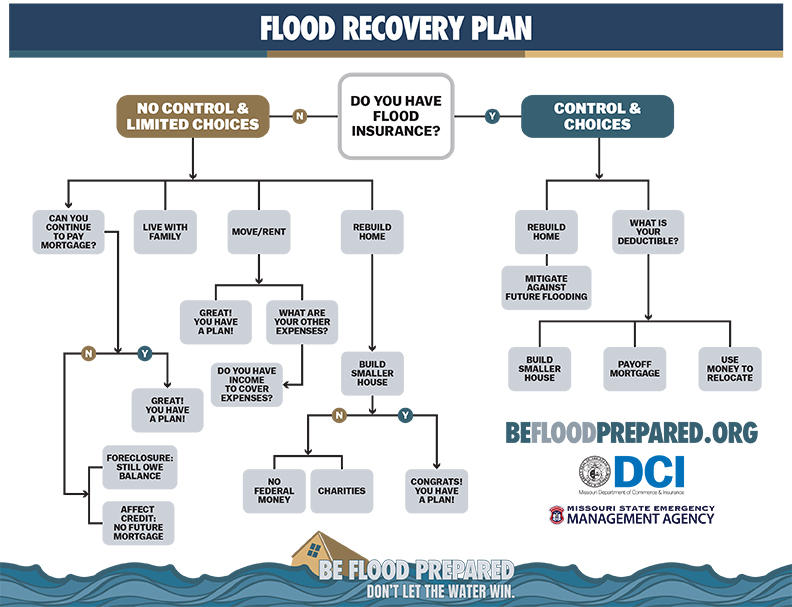
Recovery Flowchart